Seniors in therapy
Kren Harmon loves a good success story.
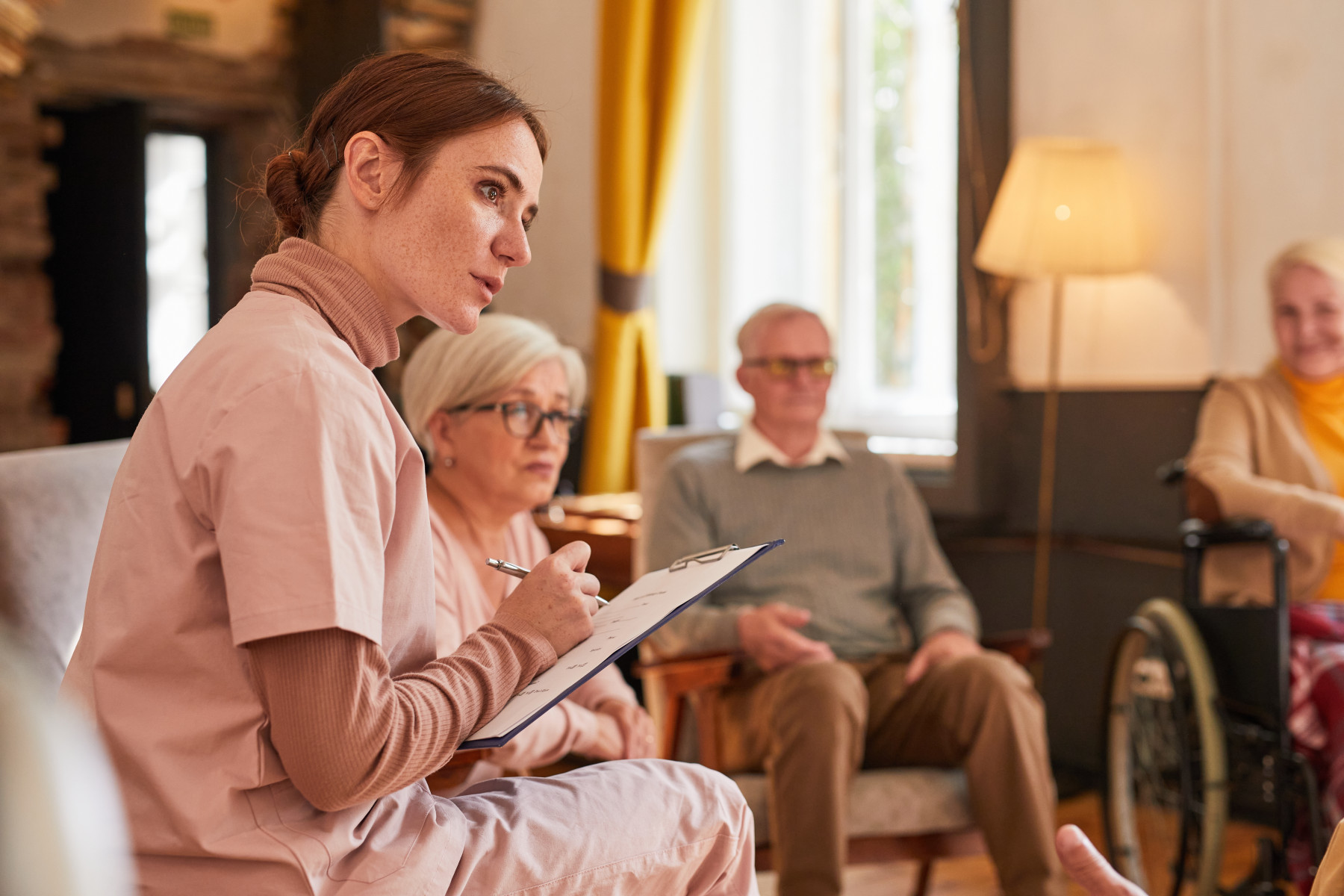
The licensed clinical social worker runs a neurological therapy group for older adults at OSF HealthCare in Alton, Illinois. Attendees might have short term memory loss due to a stroke, Parkinson’s disease or Alzheimer’s disease. Those challenges can also bring mental health concerns. But there is hope. Small group sessions like the ones Harmon runs have been proven to help not only with the seniors’ day-to-day life but also their sense of feeling alone.
“I had a new woman in group who said she had memory loss and was embarrassed. Another woman who’s a veteran of the group didn’t miss a beat. She reached over, touched the woman’s hand and said, ‘Honey we all have that’.” Harmon recalls. “The woman burst into tears and realized she’s not the only one dealing with this.
“That’s why I come to work every day,” Harmon says, beaming.
The fears, and how providers can help
Harmon has heard plenty of health concerns from older adults, and they’re all valid. The senior has moved out of their home and is worried about losing independence. They’re worried their health needs will be a burden on family. They might even be scared of dying.
Enter small group therapy. First, Harmon says, it’s a consistent thing on the senior’s schedule where they can look forward to getting out of the house and seeing people. Harmon says studies have shown more socialization for older adults means less confusion. But more importantly, the group connects attendees with others in their situation so they know they’re not alone. Harmon describes the concept in two terms: commonality of experience and installation of hope.
“We all have these same issues, but there’s hope,” Harmon says, restating what is said in a group session. “We can learn coping skills and accept what’s going on. We can support each other.
“Individual psychotherapy is great, but in group they get the benefit of having each other to lean on,” Harmon adds. “They say ‘This worked for me. You might want to try this at home.’”
A typical session might be a mix of camaraderie, memory tasks (medical term: cognitive stimulation therapy) and specialized topics like handling grief.
“We cover current events. What’s the date? What’s the weather?” Harmon outlines. “We do check-ins. Tell me something new in your life. People like that. They talk about their new great grandbaby.”
Harmon encourages her patients to expand on what they learn in group. The medical term for this is acceptance and commitment therapy. Find a way to exercise that works with your limitations. Explore a new hobby, such as puzzles or reading. Watching television all day won’t cut it, Harmon says.
“You’re never too old to learn a new skill,” she reminds.
Getting involved
If an older adult in your life could benefit from group therapy, Harmon says going through a physician might be the way to go. She’s found that seniors sometimes don’t listen to friends and family. But if their neurologist – someone they know and trust – recommends something, it might carry more weight.
“Having the doctor refer, I’ve found, makes a difference with that generation. When someone in a white coat says it, it’s the best idea ever,” Harmon chuckles.
You can also read more about healthy thoughts and behaviors on the OSF HealthCare website.
link