
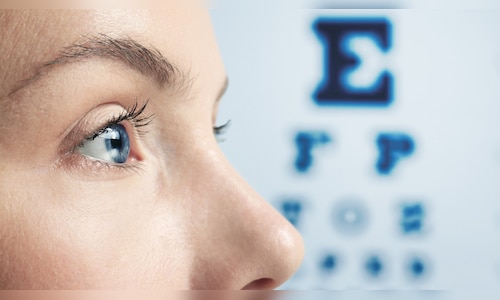
The primary culprits are uncorrected refractive errors such as nearsightedness or farsightedness, cataracts, and glaucoma. Those aged 50 and above are the hardest hit, making up 80% of the visually impaired population.
Closer to home, India bears a heavier burden. The nation is tragically known as the blind capital of the world, housing an estimated 25% of the world’s visually impaired. Over 62 million Indians grapple with vision impairment, with 13% of those living without sight. Cataracts are the chief cause, responsible for 62.6% of blindness, followed by refractive errors and glaucoma.
Amongst India’s diabetic population, 20 million face vision impairment, with 11% of those completely blind. Prolonged screen time is another contributing factor, with 23% of India’s population, or 275 million people, suffering from weakened eyesight. Children are not spared either. Approximately 8 million children under the age of 15 are visually impaired, with nearsightedness or farsightedness being the most common issues.
The prevalence of myopia among urban children aged 5 to 15 has increased from 4.44% in 1999 to a shocking 21.1% in 2019. But the crisis doesn’t end there. Conjunctivitis, age-related macular degeneration, eye injuries, dry eyes, eye strain, and squints also plague millions.
To shed light on these critical issues, CNBC-TV18 spoke with Dr S Natarajan, Chief of Clinical Services at Aditya Jyot Eye Hospital and Chief of Vitreoretinal Services at Dr Agarwal’s Group of Eye Hospitals, and Dr Sujal Shah, Director of Ophthalmology at Sir HN Reliance Foundation Hospital.
Edited Excerpts:
Q: Let’s start with the most common vision problems that Indians face and what you encounter in your practice.
Natarajan: The most common counter is the uncorrected refractive error. Every child should, by the time they go to school, even at the age of three, they can check their vision, and if there is a need for refractive error, they should correct it with spectacles.
Sometimes, children are condemned to not studying well because they can’t see the board, and not keeping them in the first row is not the answer. Check their eyes and give them glasses.
The other common condition is a retinal problem. In India, we have 100 million diabetics, and 58 million do not know they have diabetes; among the rest, 42 million know they have diabetes but don’t know that eyes can be affected. Diabetes affects the small blood vessels of the brain, heart, eye, kidney and feet. The eye is the window of the body. So, if we can take a retinal examination or a photo, many diseases can be diagnosed.
So, as a person with diabetes, they should check their eyes, which they are not doing. If you have diabetes, you should check head to foot and have an eye examination periodically.
Q: How regular should your eye check-up be?
Natarajan: I always suggest that if there is any change where the child cannot look at the mother, that’s the time they should take the child to the paediatrician and the ophthalmologist. And then, before going to play school, before going to the first standard, if everything is normal, in the end, when you go to high school, that means the sixth grade, and then when you finish school, this is for an average child. Once you join at the age of 18, usually everything is stable. So you don’t have to do it every year. But if you have myopia, you should check because one out of 10,000 people may have a retina problem. The eye should be examined thoroughly. If you are wearing glasses, then check every year.
Suppose you have symptoms like sudden black spots, flashes of light, or side vision problems. In that case, they should go to an eye doctor because they may not know at that time whether to go to the retina, but they can go to any eye doctor, and they should refer the patient if there’s any doubt to the retina surgeon.
Q: What stood out to me was the statistics of cataracts in India — 62% have cataracts and vision impairment due to cataracts. Why do we have such a high rate?
Shah: One is age. It’s an ageing population. We have increased life expectancy, so we have more risk of age-related problems like cataracts. We are a tropical country with very high exposure to UV light, nutritional deficiencies, and access to health care, especially in rural places. Hence, they are not able to go for early screening. These are some of the common reasons why we have such a high rate of cataracts in India.
Q: What are the early signs and symptoms of cataracts that one should be aware of?
Shah: Early signs would be blurred vision, things appearing out of focus, colours appearing faded, at night if you are going out and there is an oncoming headlight, you would get glare from that, you might see halos around it, these would be some of your early signs of cataract.
Q: And when should one get screened?
Shah: I think after 40, it is a good idea to screen every year at least once for cataracts, glaucoma, or any other retinal conditions.
Q: Can cataracts be prevented or, you know, pushed down further?
Shah: Unfortunately, there is no prevention for cataracts; though research for this has been ongoing for many years, there is no possible prevention. What can be done to delay progression is UV protective sunglasses and a healthy diet. If you have any major disease like diabetes, hypertension, or cholesterol, then have these things controlled, keep a healthy diet and go for a yearly check-up to find early signs of cataract or any other concurrent eye disease.
Q: So what would you recommend when it comes to a check for your retina, and what are probably the most common diseases you see in the retina?
Natarajan: I think diet has a significant role. So, one is a low-fat diet, which means green leafy vegetables, which will help to prevent age-related macular degeneration. Additional rare elements like zinc, selenium, and omega fatty acids also help prevent many eye problems.
Watch the accompanying video for the entire discussion.
link