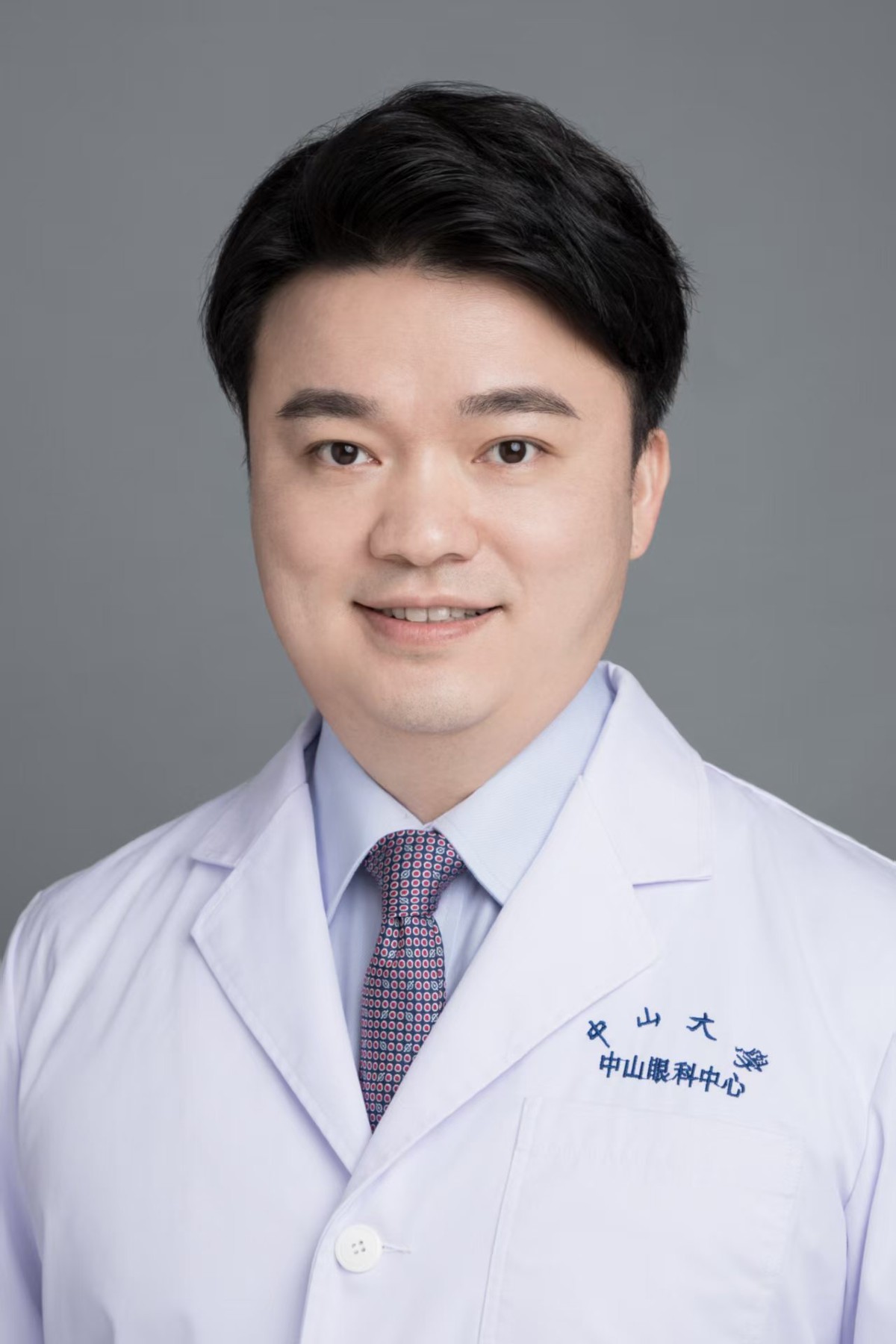
Haotian Lin, president of the Zhongshan Ophthalmic Center of Sun Yat-sen University
According to the World Health Organization (WHO), eye conditions affect more than 2.2 billion people worldwide, and demand for eye care continues to grow, with existing services unable to meet the need. Haotian Lin discusses how pioneering technologies, international cooperation, and targeted healthcare strategies can help address the growing challenges of vision care worldwide.
Why is eye health becoming a global priority?
As we age, we often experience a decline in visual functions, or develop eye conditions that impair sight and health. By 2050, the global population aged 60 or over is expected to hit more than 2 billion. This will drive a surge in demand for eye care, presenting significant challenges to healthcare systems. Beyond vision loss itself, poor eye health also profoundly impacts cognition, mental health and physical independence — further driving the need for comprehensive, globally accessible vision healthcare solutions.
What is the status of eye healthcare today?
One of the greatest challenges is the growing burden of eye diseases as populations age. Cataracts and age-related macular degeneration, which damages the retina and impairs central vision, have become increasingly common due to extended life expectancy. Younger populations also have rising rates of myopia linked to increased screen time.
In China, the causes of vision impairment have shifted dramatically — from nutritional deficiencies and infectious eye diseases decades ago, more towards chronic conditions such as metabolic disorders and ageing-related diseases today. Metabolic-related eye diseases, such as diabetic retinopathy, a complication of diabetes that affects the eyes, now pose a major public health challenge, calling for targeted prevention and comprehensive care.
What innovative approaches are you taking?
We have been exploring new strategies using artificial intelligence (AI). Existing healthcare approaches are hard to scale due to their reliance on skilled specialists. But AI will enable more efficient and more accessible screening. In recent years we have integrated AI across various clinical settings, achieving several global milestones.
These include establishing the world’s first AI clinic for cataracts based on a deep learning algorithm. Cataracts are a leading cause of preventable blindness globally, making efficient screening crucial. We built an end-to-end AI platform — spanning basic research, translation and clinical implementation — to increase efficiency and accuracy of cataract screening. Our approach involves capturing early-stage cataracts through rigorous data collection and algorithm design. We developed tools that automatically diagnose and prioritize high-risk cases, significantly improving the efficiency of clinical practice.
Based on the AI outpatient service, we pioneered randomized clinical trials validating AI-based diagnostics. Today, our smartphone-based AI tools for eye-disease screening are widely used in China and across the world.
We integrated computer science, clinical medicine and bioethics expertise to make these advances. This interdisciplinary approach helps ensure that AI tools for eye care are safe, effective and beneficial for patients globally.
How are you collaborating internationally?
As China’s only ophthalmology hospital designated as a WHO Collaborating Centre for Eye Care and Vision, Zhongshan Ophthalmic Center (ZOC) plays a leading role in many international initiatives. Our contributions include implementing the WHO global eye health action plan, setting standards for ophthalmic disease screening — such as AI-assisted diabetic retinopathy screening — advancing both clinical excellence and technological innovation.
We have provided medical aid in 12 countries and regions since the 1970s. In 2020, we established China’s first modern overseas ophthalmic centre in the Maldives, which has become a model for international medical cooperation.
This year, we will continue to integrate AI and mobile healthcare technologies in international medical aid, delivering faster and more accessible eye care to patients in need, especially in less developed areas.
How are you attracting talent?
Our goal is to build a globally competitive institution that attracts world-class scientists and clinicians. We’ve developed robust exchange programmes with top universities worldwide, including in Hong Kong, the United States and the United Kindom.
Additionally, initiatives such as our ophthalmological remote-sensing satellite project — which studies the geographical distribution of eye disease cases to detect early signs of problems in specific regions — and a remote ophthalmic robotic surgical system, position us as leaders in cutting-edge technology. These groundbreaking works attract ambitious researchers who are eager to contribute to transformative science. We encourage talent from diverse backgrounds to join our centre, ensuring a vibrant, innovative research environment.
As ZOC celebrates its 60th anniversary, what is your vision for the future of eye care?
I expect transformative applications of AI in ophthalmology within the next decade, with major advances in disease prediction, early diagnosis and personalized treatments. Our mission at ZOC remains clear: to build a world-leading ophthalmic center dedicated to universal, equitable eye care. Through global partnerships and continued innovation, we hope to substantially reduce preventable blindness, improving quality of life around the world.
Learn more about the important work of the Zhongshan Ophthalmic Center of Sun Yat-sen University, as well as research published by Haotian Lin.
link